

Conquer the Roof of Africa: 6-Day Marangu Route Trek
The "Coca-Cola" Route: Comfort, Huts, and High Success Rates
Standing at 5,895 meters (19,341 ft), Mount Kilimanjaro is the roof of Africa. The Marangu Route is the most established path to the summit, famous for being the only route offering A-frame dormitory huts, providing trekkers with extra protection from the elements.
At Sunup Adventures, our 6-day itinerary includes a vital acclimatization day, significantly increasing your chances of reaching Uhuru Peak safely and comfortably.
Why Book Your Marangu Climb with Sunup Adventures?
Expert Mountain Guides: Our guides are WFR (Wilderness First Responder) certified.
Safety First: We carry pulse oximeters and emergency oxygen on every climb.
Ethical Trekking: As proud supporters of fair wages, our porters are the heartbeat of our company.
Premium Nutrition: High-calorie, delicious meals designed for high-altitude performance.
6-DAY MARANGU ROUTE ITINERARY
Day 1: Moshi to Marangu Gate to Mandara Hut
Elevation: 1,860m to 2,700m (8,858 ft)
Hiking Time: 4–6 hours | Distance: 8km
Habitat: Montane Rainforest
Your adventure begins with a scenic drive from Moshi to the Marangu Gate. After finalizing park permits and meeting your expert Sunup team of guides and porters, you’ll enter the lush rainforest. Expect misty trails, towering ancient trees, and the chance to spot Blue monkeys. We arrive at Mandara Hut by late afternoon.
Day 2: Mandara Hut to Horombo Hut
Elevation: 2,700m to 3,700m (12,139 ft)
Hiking Time: 5–7 hours | Distance: 12km
Habitat: Heath and Moorland
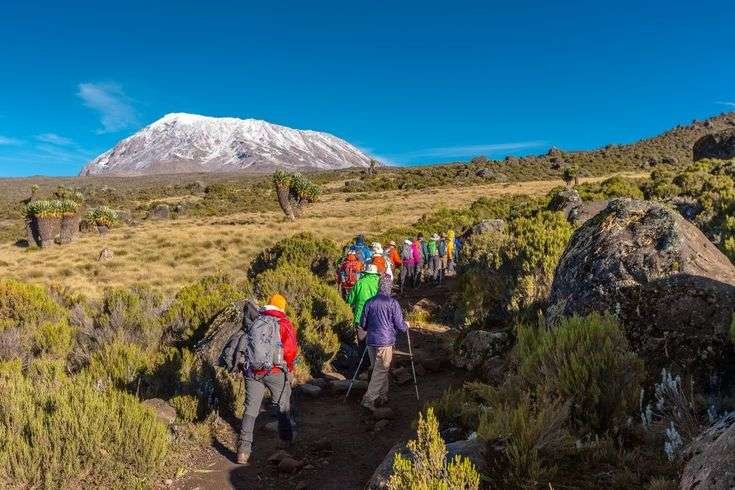
The forest thins out as you enter the moorland zone. You’ll navigate through giant lobelias and groundsels. As the air thins, the views open up to reveal the jagged peaks of Mawenzi and the snow-capped dome of Kibo. You’ll overnight at Horombo Hut, the busiest and most social camp on the mountain.
Day 3: Strategic Acclimatization Day (Horombo Hut)
Elevation: 3,700m (Stay here)
Activity: “Climb High, Sleep Low” hike to Zebra Rocks
Success on Kilimanjaro is all about acclimatization. Today, we stay at Horombo Hut but take a 2–3 hour hike to Zebra Rocks (4,000m). This stimulates your red blood cells to carry more oxygen, drastically reducing the risk of Altitude Sickness (AMS).
Day 4: Horombo Hut to Kibo Hut
Elevation: 3,700m to 4,700m (15,420 ft)
Hiking Time: 6–8 hours | Distance: 10km
Habitat: Alpine Desert
Today we cross the “Saddle,” a high-altitude plateau between Kibo and Mawenzi. The landscape becomes lunar—stark, rocky, and silent. We arrive at Kibo Hut early to enjoy a hot meal and go to sleep by 7:00 PM, as your summit attempt begins at midnight.
Day 5: The Summit Push (Uhuru Peak) & Descent
Elevation: 4,700m to 5,895m (19,341 ft) and down to 3,700m
Hiking Time: 10–15 hours | Distance: 16km
Habitat: Arctic / Stone Scree
The Big Day. Around midnight, we begin the final ascent under the stars. The trail is a steep series of zig-zags on volcanic scree. We reach Gillman’s Point at sunrise, then continue along the crater rim to Uhuru Peak—the highest point in Africa. After a brief celebration, we descend back to Horombo Hut for a much-needed long sleep.
Day 6: Horombo Hut to Marangu Gate
Elevation: 3,700m to 1,860m
Hiking Time: 5–7 hours | Distance: 20km
Habitat: Rainforest
A gentle descent through the moorland and back into the rainforest. At the Marangu Gate, you will sign out of the National Park and receive your Gold Summit Certificate. Your Sunup Adventures vehicle will be waiting to drive you back to Moshi for a celebratory dinner and a hot shower!
Kilimanjaro Marangu Route: Frequently Asked Questions
1. How difficult is the 6-Day Marangu Route?
The Marangu Route is often called the “easiest” route because of its gradual slope and hut accommodations. However, “easy” is relative. The final summit push from Kibo Hut to Uhuru Peak is a grueling 1,200m (3,937 ft) ascent over steep volcanic scree in sub-zero temperatures. Physical fitness and mental resilience are essential.
2. Why is the 6-day itinerary better than the 5-day version?
The main reason climbers fail to reach the summit is Altitude Sickness. The 5-day Marangu trek is notorious for low success rates because it lacks an acclimatization day. By adding Day 3 at Horombo Hut, you give your body time to produce more red blood cells, which significantly increases your chances of reaching the top safely.
3. What is the accommodation like in the Marangu Huts?
Unlike other routes where you sleep in mountain tents, Marangu offers A-frame wooden huts.
Mandara & Kibo Huts: Dormitory-style bunks with mattresses and pillows.
Horombo Hut: A larger “village” of huts.
Facilities: Solar-powered lighting and shared latrines/toilets. You will still need a warm 4-season sleeping bag, as the huts are not heated.
4. What is the “Coca-Cola” Route?
“Coca-Cola Route” is a nickname given to Marangu because it used to be the only route where you could buy bottled soda at the huts. Today, while it remains the most “commercial” and comfortable path, it still offers stunning views of the Mawenzi Peak and the Saddle.
5. What should I pack for a 6-day trek?
You need to pack for four distinct climate zones. Key items include:
Clothing: Moisture-wicking base layers, a heavy down jacket (for summit night), and waterproof GORE-TEX outer shells.
Footwear: Broken-in waterproof hiking boots and thermal socks.
Accessories: A headlamp (essential for the midnight summit start), trekking poles, and a 3-liter hydration bladder.
Personal: High-SPF sunscreen, lip balm, and a small personal first-aid kit.
6. Do I need specialized mountaineering gear?
No. Kilimanjaro is a “trekking peak,” meaning no technical climbing, ropes, or ice axes are required. You only need standard high-altitude hiking gear. Sunup Adventures also offers gear rental for items like sleeping bags and trekking poles.
7. Is the water safe to drink on the mountain?
Our porters collect water from mountain streams and boil/filter it for you every day. You should never drink unpurified water from the streams. We recommend using purification tablets (like Aquatabs) in your water bladder for an extra layer of safety.
8. What happens if I get Altitude Sickness?
Our Sunup Adventures guides are Wilderness First Responder (WFR) certified. They perform twice-daily health checks using pulse oximeters to monitor your oxygen saturation. If you show symptoms of severe Acute Mountain Sickness (AMS), our team is trained to facilitate a safe and rapid descent.
9. What is the best time of year to climb?
The best windows for clear skies and lower precipitation are:
January to March: Colder, but very clear with beautiful snow on the summit.
June to October: The “High Season”—dry and pleasant, though trails are busier.
10. How much should I tip the guides and porters?
Tipping is a long-standing tradition on Kilimanjaro and is vital for the local economy. While it is at your discretion, the standard industry recommendation is:
Chief Guide: $20–$25 per day
Assistant Guide: $15–$20 per day
Cook: $15 per day
Porters: $10 per day (per porter)
Note: These tips are usually shared among the entire group of climbers.