

6-Day Mount Kenya Challenge: Sirimon Up, Chogoria Down & Peak Circuit
Join Sunup Adventures for the ultimate 6-day Mount Kenya traverse. Experience the Sirimon Route, Point Lenana summit, and the stunning Gorges Valley on Chogoria. Book your 2026 trek today!
6 DAY MOUNT KENYA SIRIMON CHOGORIA TREK
Experience the definitive Mount Kenya trek. This 6-day expedition is designed for the bold who want more than just a summit; it offers a full Peak Circuit circumnavigation of the jagged towers of Batian and Nelion.
By ascending via the Sirimon Route (known for its steady acclimatization) and descending the Chogoria Route (famed for its sheer cliffs and glacial lakes), you witness the mountain’s most dramatic transitions—from the “Vertical Bog” to the sunrise at Point Lenana (4,985m).
Duration: 6 Days / 5 Nights
Difficulty: Moderate to Challenging
Max Altitude: 4,985m (Point Lenana)
Highlight: Peak Circuit navigation & Gorges Valley descent.
DETAILED EXPEDITION ITINERARY
Day 1: Nairobi to Sirimon Gate & Old Moses Camp (3,300m)
The Journey Begins. We depart Nairobi early for a scenic drive through the central highlands, crossing the Equator to Reach Sirimon Gate. After a picnic lunch and registration, we begin a steady 3-hour hike through magnificent yellow wood and podocarpus forests.
Hiking Time: 3-4 Hours
Terrain: Montane Forest
Highlight: First glimpses of the twin peaks, Batian and Nelion.
Day 2: Old Moses to Shipton’s Camp (4,200m)
Into the Afro-Alpine Zone. Today is a true test of endurance as we cross the Ontulili and Liki Rivers. We trek through the sprawling moorlands, home to the unique Giant Lobelias and Senecios, arriving at Shipton’s Camp nestled at the base of the high peaks.
Hiking Time: 6-7 Hours
Elevation Gain: 900m
Highlight: Crossing the Mackinder Valley with the jagged peaks looming ahead.
Day 3: Acclimatization Day at Shipton’s Camp
Climb High, Sleep Low. To ensure a successful summit, we spend a day acclimatizing. We take a guided walk to the stunning Kami Hut or the emerald waters of Hausberg Tarns. This day is crucial for your body to adjust to the thin air.
Activity: Technical walk to glacial lakes.
Benefit: Dramatically increases your summit success rate.
Day 4: Shipton’s Camp to Point Lenana (4,985m) & Austrian Hut
The Summit Push. We start at 3:00 AM under a blanket of stars. The final scree slope leads us to Point Lenana, the “Trekker’s Summit,” just in time for a breathtaking sunrise over the Kenyan plains. After celebrating, we descend to Austrian Hut (4,790m) to stay high and enjoy the alpine desert.
Summit Time: 3-4 Hours
Descent: 1 Hour to Austrian Hut
Highlight: Sunrise views reaching as far as Mt. Kilimanjaro on clear days.
Day 5: Austrian Hut to Meru Mt. Kenya Bandas (2,950m)
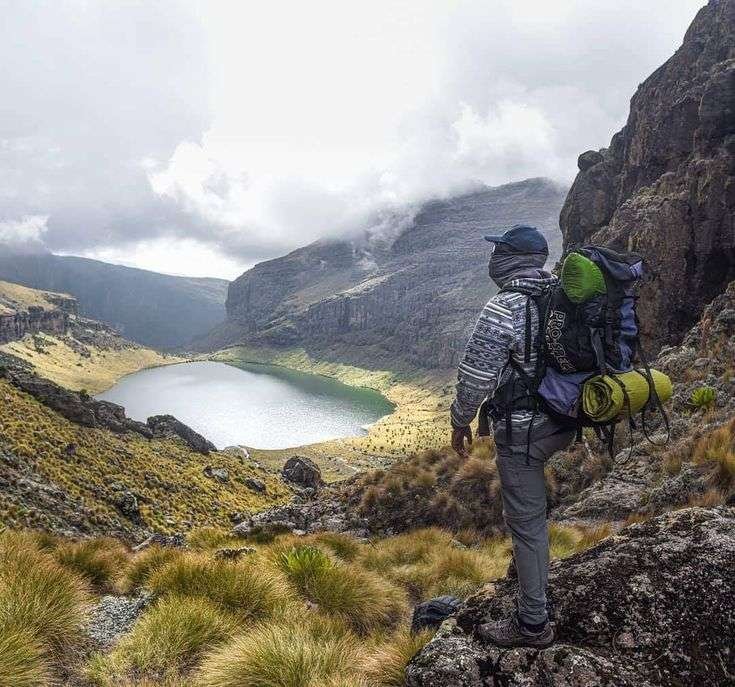
The Spectacular Descent. Today we enter the Chogoria route, arguably the most beautiful side of the mountain. We descend via the Gorges Valley, passing the sheer cliffs of “The Temple” and the Nithi Waterfalls before reaching the comfort of the Meru Bandas.
Hiking Time: 6 Hours
Terrain: Rocky ridges and moorland to bamboo forest.
Highlight: Spectacular views of Lake Michaelson and the Nithi Falls.
Day 6: Meru Bandas to Chogoria & Nairobi
The Final Stretch. A gentle morning walk through the bamboo forest brings us to the Chogoria Gate. Here, we board our 4×4 vehicles for the journey back to Nairobi, arriving in the late afternoon with a lifetime of memories.
Activity: Forest walk and drive back to the city.
Frequently Asked Questions: Mount Kenya Trekking
1. How difficult is the Sirimon-Chogoria 6-day trek?
This route is rated as Moderate to Challenging. While you don’t need technical climbing skills to reach Point Lenana, you should be in good physical condition. The 6-day itinerary is specifically designed to provide superior acclimatization compared to 4 or 5-day treks, significantly increasing your summit success rate.
2. Do I need technical climbing gear for Point Lenana?
No. Point Lenana (4,985m) is a “trekking peak.” You will be hiking on established trails, rock, and occasionally light scree. No ropes, harnesses, or ice axes are required. However, sturdy waterproof hiking boots and trekking poles are highly recommended for the descent.
3. What is the best month to trek Mount Kenya in 2026?
The best trekking windows are the dry seasons:
January to March: Typically clear skies and dry trails.
July to October: Great weather, though slightly cooler.
Tip: While you can trek year-round, the rainy seasons (April-May and November) make the “Vertical Bog” and Gorges Valley trails very slippery.
4. How do I prevent Altitude Sickness (AMS)?
Our 6-day itinerary is your best defense. We follow the “Climb High, Sleep Low” principle, especially on Day 3 at Shipton’s Camp.
Hydration: Drink 3–4 liters of water daily.
Pacing: Walk “Pole Pole” (slowly) to allow your heart rate to stay steady.
Nutrition: Eat high-carb meals even if your appetite decreases.
5. What is the difference between Sirimon and Chogoria routes?
Sirimon (Ascent): Features a more gradual gain in altitude and is located on the “dry side” of the mountain, making for a smoother start.
Chogoria (Descent): Widely considered the most scenic route on the mountain. It offers dramatic views of the Gorges Valley, Lake Michaelson, and the Nithi Waterfalls.
6. What should I pack for a 6-day Mount Kenya trek?
You will need a layered clothing system:
Base Layer: Moisture-wicking thermals.
Mid Layer: Fleece or heavy wool sweater.
Outer Layer: Waterproof and windproof jacket (Gore-Tex or similar).
Sleeping Bag: Rated for at least -10°C.
Footwear: Broken-in waterproof hiking boots and 3-4 pairs of wool socks.
7. Are tips for guides and porters included?
Tips are a standard practice in the Kenyan trekking industry and are not included in the base price. As a guideline, we recommend budgeting roughly 10–15% of your total trek cost to be shared among the mountain crew (guides, porters, and cooks) as a token of appreciation for their hard work.