

4-Day Mount Kenya Trek: Sirimon Route Up & Chogoria Route Down
Overview
Summit Point Lenana on the ultimate 4-day Mount Kenya traverse. Experience the dry Sirimon ascent and the breathtaking Chogoria descent with Sunup Adventures. Expert guides, stunning moorlands, and Gorges Valley views. Book your 2026 trek today!
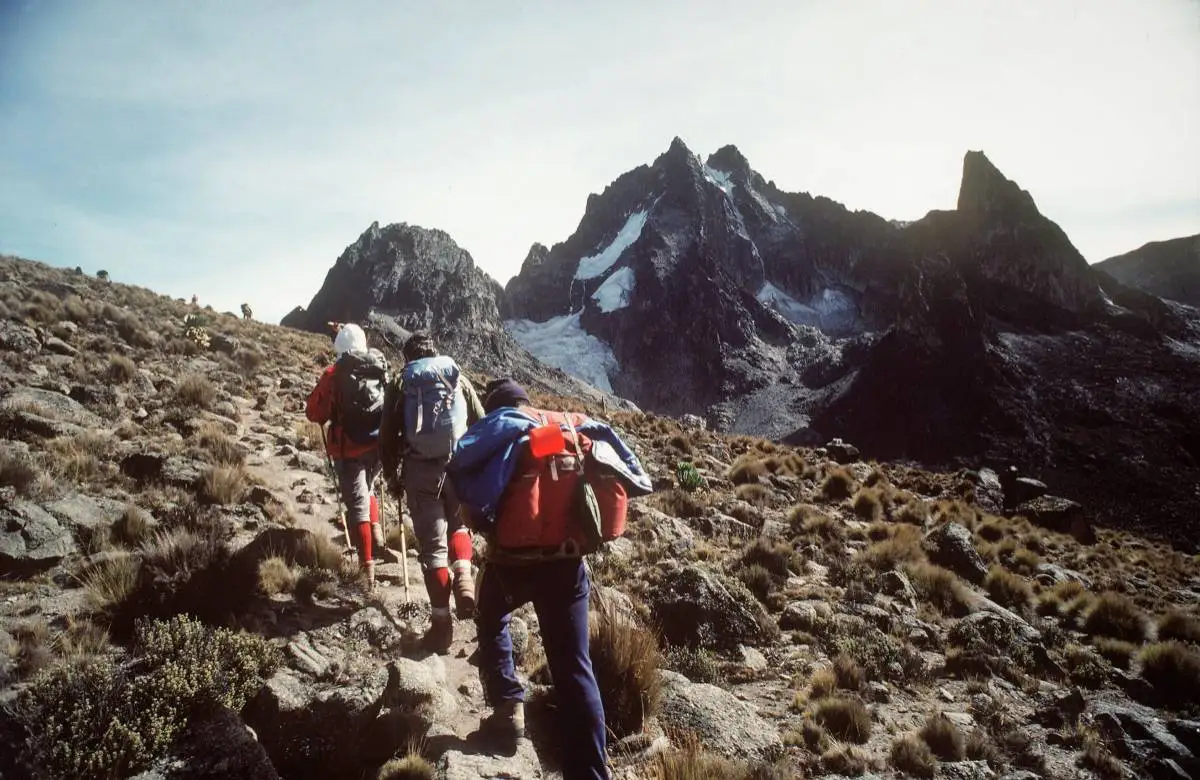
Mount Kenya 4-Day Traverse: Sirimon Up – Chogoria Down
This 4-day express traverse is designed for fit trekkers who want to experience the full diversity of Africa’s second-highest peak in a compressed timeframe. By ascending via the Sirimon Route (Northwest) and descending via the Chogoria Route (East), you witness the dramatic transition from the dry, high-altitude moorlands to the lush, lakeside Gorges Valley—widely considered the most beautiful descent in Africa.
The Experience
Total Distance: Approximately 50–55 km.
Highest Point: Point Lenana (4,985 m).
Difficulty: Moderate to Challenging (Requires good physical fitness due to long descent days).
Highlights: Mackinder’s Valley, the Gorges Valley, Lake Michaelson, and the iconic sunrise at Point Lenana.
Why This Route is the “Sunup” Choice
Optimized Acclimatization: The Sirimon route offers a more gradual ascent than Naro Moru, helping you adjust to the altitude before the summit push.
Unrivaled Scenery: While Sirimon provides classic mountain vistas, the Chogoria descent is the “jewel” of the mountain, featuring the sheer cliffs of The Temple and the turquoise waters of Lake Michaelson.
The Traverse Advantage: You never see the same trail twice. This route offers a complete geographical cross-section of Mount Kenya National Park.
THE 4-DAY MOUNT KENYA TRAVERSE: DETAILED ITINERARY
Day 1: Nairobi to Old Moses Camp (3,300m)
Distance: 9 km | Time: 3–4 hours | Habitat: Rainforest & Bamboo Your adventure begins with a morning pickup from Nairobi. We drive through the fertile central highlands, stopping at the Equator for photos before reaching Nanyuki town for a hearty lunch. From here, we transfer to the Sirimon Park Gate (2,660m).
The trek starts with a gentle ascent through a magnificent yellow-wood forest. As the canopy thins into bamboo zones, you’ll reach Old Moses Camp. This first night is crucial for acclimatization, offering your first clear views of the high peaks under the vast African sky.
Day 2: Old Moses to Shipton’s Camp (4,200m)
Distance: 14 km | Time: 7 hours | Habitat: Alpine Moorland After an early breakfast, we strike out across the sprawling moorlands. The trail crosses the Ontulili and Liki North Rivers before climbing into the expansive Mackinder’s Valley.
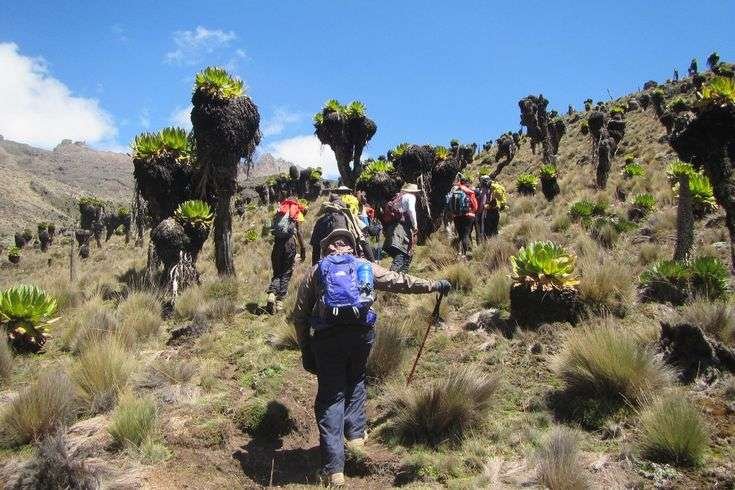
This day offers a dramatic change in scenery as you encounter unique high-altitude flora, including the Giant Lobelia and Groundsel. As we approach Shipton’s Camp, located directly at the base of the towering volcanic peaks (Batian and Nelion), you’ll feel the true scale of the mountain. We spend the night here to prepare for the summit push.
Day 3: The Summit & Gorges Valley (4,985m – 4,300m)
Distance: 12 km | Time: 8–10 hours | Habitat: Alpine Desert & Glacial Valleys The Highlight Day. At 3:00 AM, we begin our push to the summit of Point Lenana (4,985m). We aim to reach the peak just as the sun breaks over the horizon, often revealing Mount Kilimanjaro in the far distance.
After celebrating your success at the summit, we begin a spectacular descent via the Chogoria Route. Unlike other routes, this path takes you across the Hausberg Col and into the Gorges Valley—widely considered the most beautiful place on the mountain. We finish the day at Mintos Hut, nestled near the emerald waters of Lake Michaelson and the sheer cliffs of “The Temple.”
Day 4: Lake Ellis to Chogoria Gate – Nairobi
Distance: 22 km | Time: 7–8 hours | Habitat: Afro-alpine to Rainforest Our final day is a scenic descent past the tranquil Lake Ellis. The trail winds through heather and protea bushes, offering views of the waterfall-rich landscape of the Chogoria side.
Upon reaching the Chogoria Gate (2,950m), we transition to a 4×4 vehicle for the drive through the dense bamboo and rainforest belts to Chogoria town. Here, we enjoy a final mountain team lunch before the drive back to Nairobi, arriving at approximately 5:00 PM.
What’s Included with Sunup Adventures
Our Promise: We handle the logistics so you can focus on the climb.
Professional Crew: Lead mountain guides, an assistant guide (for groups), a high-altitude chef, and a dedicated porter team.
Transportation: Private transfers from Nairobi to the mountain and back.
All Fees: Mount Kenya National Park entry and camping/hut fees.
Full Board: Nutritious, high-energy meals prepared fresh on the mountain, including treated drinking water.
What to Pack” checklist
A well-prepared packing list is essential for the 4-day traverse, where weather can shift from tropical sun to sub-zero alpine winds in a single afternoon. At Sunup Adventures, we recommend a “layering” system to stay dry and warm.
1. The Layering System (Clothing)
Avoid cotton; it holds moisture and gets cold. Stick to synthetic or wool fabrics.
Base Layer: 2 moisture-wicking thermal tops and bottoms (merino wool or polyester).
Mid-Layer: 1–2 fleece jackets or a warm wool sweater for insulation.
Insulating Layer: A high-quality down or synthetic “puffer” jacket (essential for summit night and evenings at camp).
Outer Shell: Waterproof and windproof jacket and trousers (Gore-Tex or similar).
2. Footwear & Extremities
Hiking Boots: Sturdy, waterproof, and well broken-in boots with good ankle support.
Camp Shoes: Lightweight sneakers or sandals to wear at Shipton’s and Chogoria Bandas.
Socks: 4–5 pairs of thick thermal hiking socks and a few thin liner socks to prevent blisters.
Gloves: 1 pair of thin liners and 1 pair of heavy waterproof gloves/mittens.
Headgear: A warm fleece hat (covering ears) and a wide-brimmed sun hat or cap.
Gaiters: Highly recommended to keep scree and mud out of your boots.
3. Technical & Sleeping Gear
Sleeping Bag: A 4-season bag rated for at least -10 degrees centigrade (14 degrees Fahrenheit).
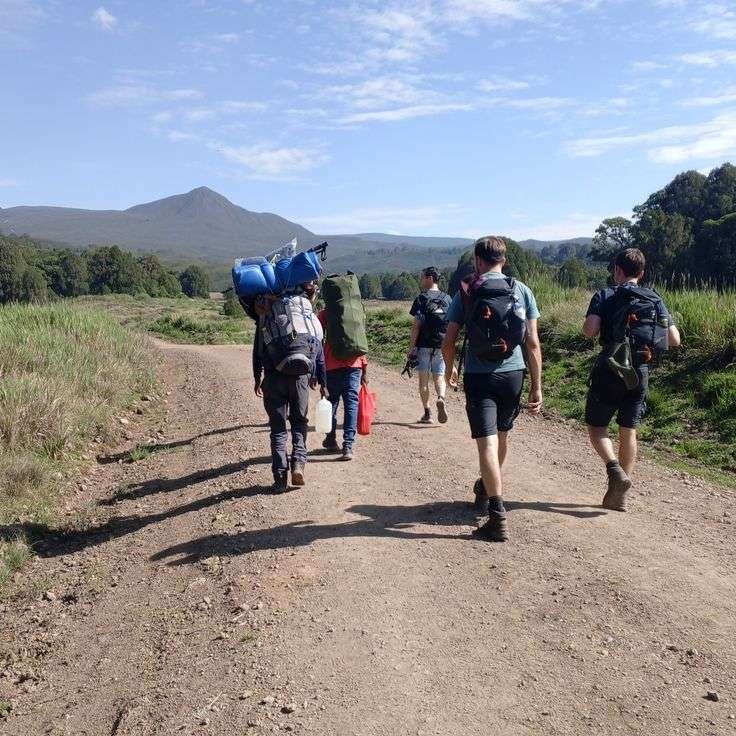
Backpacks: * Main Rucksack (65–75L): To be carried by our porters (max weight: 15kg).
Daypack (25–35L): For you to carry your water, camera, and rain gear.
Trekking Poles: Essential for saving your knees during the long Chogoria descent.
Headlamp: With extra sets of batteries (crucial for the pre-dawn summit push).
4. Personal Essentials
Hydration: 2–3 liter water capacity (bladder or hard plastic bottles). Note: Disposable plastic bottles are banned in the park.
Sun Protection: High SPF sunscreen, lip balm with SPF, and UV-protection sunglasses.
Toiletries: Wet wipes, hand sanitizer, and a small quick-dry towel.
Snacks: High-energy treats (chocolate, nuts, energy bars) to supplement camp meals.
First Aid: Personal medications, Ibuprofen, and “moleskin” or blister plasters.
Sunup Tip: We provide communal gear like tents and cooking equipment, but if you’re missing a sleeping bag or poles, we offer high-quality gear for hire. Just let us know in advance!
Frequently Asked Questions: Planning Your Mt. Kenya Trek
When is the best time of year to climb the Sirimon-Chogoria route?
The “golden windows” for Mount Kenya are during the two dry seasons. The primary window is from late December to March, offering the warmest temperatures and clearest sunrise views. The secondary window is from July to September, which is slightly cooler but provides crisp, stable weather and stunning photography conditions.
What happens if it rains during my trek?
While we prefer the dry seasons, mountain weather is unpredictable. Our guides are trained to manage treks in varying conditions. We recommend avoiding the “Long Rains” (April–June) when trails become very muddy. During the “Short Rains” (October–November), we typically schedule our hiking starts earlier in the morning to beat the afternoon showers.
Is the Sirimon-Chogoria route difficult for beginners?
This traverse is considered “moderate” but physically demanding due to the 4-day pace. The ascent via Sirimon is gradual and excellent for acclimatization, but the descent via Chogoria is long (over $20 km on day three). We recommend a good level of cardiovascular fitness and at least a few weekend hikes in your boots before arriving.
How do I handle the altitude on a 4-day itinerary?
The 4-day Sirimon-Chogoria route is a fast-paced traverse. To help you reach Point Lenana ($4,985 m) safely, our guides emphasize “Pole Pole” (slowly, slowly). We also recommend staying well-hydrated—drinking 3–4 liters of water daily—and eating high-carb meals provided by our mountain chefs to maintain your energy levels.
What kind of accommodation should I expect?
On this specific route, you experience a mix of mountain life. On the Sirimon side, we stay in bunk-style mountain huts (Old Moses and Shipton’s). After the summit, as we descend the Chogoria side, we transition to the Chogoria Bandas, which offer a bit more comfort (and often hot showers!) after your long summit day.
Sunup Pro-Tip: If you have an extra day, we highly recommend extending this to a 5-day trek. This adds an extra night of acclimatization at Shipton’s Camp, significantly increasing your chances of a comfortable summit push.
How do you handle Altitude Sickness (AMS)?
Safety is our top priority. Our guides are trained to monitor you for symptoms of Acute Mountain Sickness (AMS) using the Lake Louise Scoring System. We carry pulse oximeters to check your oxygen saturation daily. If a climber shows signs of severe AMS, our protocol is an immediate, supervised descent to a lower altitude. We always recommend consulting your doctor about Diamox before your trip.
Is there mobile phone signal or Wi-Fi on the mountain?
Expect to be “off the grid.” There is no Wi-Fi on Mount Kenya. You may find intermittent Safaricom signal at Old Moses Camp and certain ridges on the Chogoria descent, but it is unreliable. We recommend letting family know you will be unreachable for the duration of the trek. Our guides carry satellite communication or radio sets for emergencies.
What is the tipping culture for the mountain crew?
Tipping is a standard practice in the Kenyan trekking industry and is deeply appreciated by the hard-working crew. As a general guideline, we suggest a total tip pool of $100 – $150 USD per climber, which is distributed among the lead guide, assistant guides, cook, and porters at the end of the trek.
Can I rent gear if I don’t want to fly with mine?
Yes! Sunup Adventures maintains a store of high-quality rental gear. You can hire sleeping bags (rated to -10 degrees Celsius), trekking poles, waterproof jackets, and even hiking boots. Please send us your requirements at least two weeks before your arrival so we can reserve your size.
What kind of food is served on the trek?
Our high-altitude chefs prepare fresh, hot meals daily.
- Breakfast: Porridge, eggs, sausages, toast, and fruit.
- Lunch: Usually a packed lunch (sandwiches, chicken, fruit, juice) to eat on the trail.
- Dinner: Soups followed by pasta, rice, or potatoes with meat and vegetable stews.
- Dietary Needs: We easily accommodate vegetarian, vegan, and gluten-free diets if notified in advance.